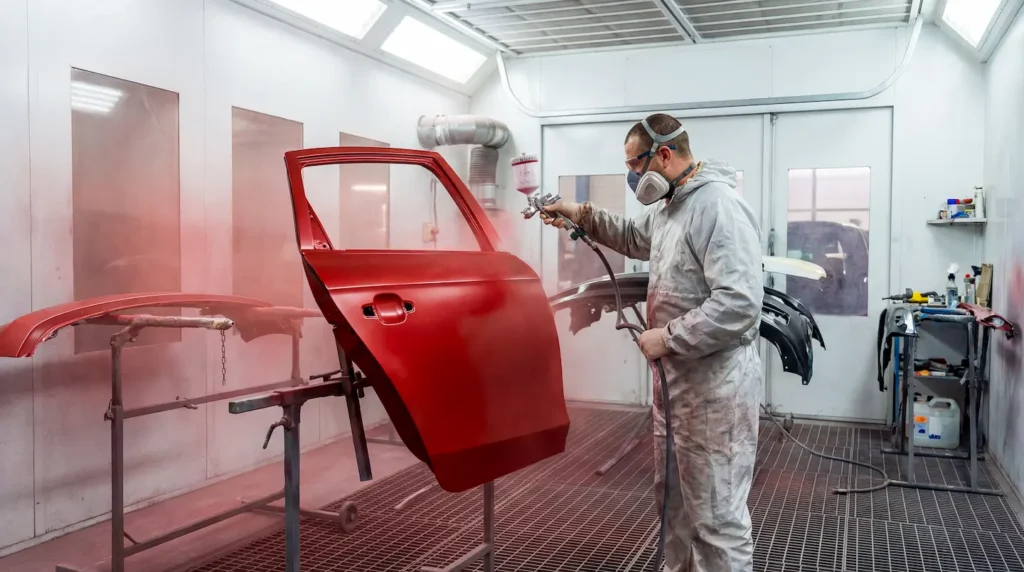
Body shop estimating: how it works with Audatex, Qapter, DAT and GT Motive
Body shop estimating is the moment a damaged vehicle becomes a precise list of parts, labour hours and paint. It decides what the insurer will pay and what the workshop can invoice. Here is how an estimate is built in France, who approves it, and what the tools the whole trade uses are for.


The management software built for automotive aftersales.
Body shop estimating: what is it, and who does it?
A body shop estimate is the detailed costing of a repair: parts to replace, panel and paint operations, and the labour time required. In an insured claim, the repairer prepares it and the assessor appointed by the insurer approves or challenges it.
An estimate is therefore not just a quote. It is a common language between the workshop, the assessor and the insurer: everyone reads the same part references and the same repair times, drawn from manufacturer data. That is what lets them agree on an amount without going through every line by hand.
From assessment file to signed repair order: the steps
It all starts when the assessment file reaches the workshop. Depending on the severity of the damage, the assessor chooses a remote assessment (EAD), based on photos, for light damage, or an on-site assessment, travelling to see the vehicle, particularly when safety components are affected.
The workshop then prepares the estimate and sends it to the assessor, who approves or negotiates it; there can be several rounds before agreement. Once the amount is approved, the workshop prepares the repair order, which the customer signs: in an insured bodywork repair, they are not accepting a price but authorising the work. Parts can then be ordered.
If hidden damage appears during dismantling, the file does not start again: the workshop adds supplementary work to the estimate, and the assessor approves it in turn.
Parts, paint, labour: what an estimate contains
An estimate reads in two main blocks. The first is labour: each operation (removal, wing repair, bumper replacement, painting) is linked to a time, multiplied by an hourly rate. In French bodywork, these rates are graded by difficulty level, T1, T2 and T3, plus the paint rate.
The second block covers parts and items: manufacturer references, quantities, prices and discounts, plus paint materials. The total of these two blocks is the amount the assessor reviews and that the workshop then invoices to the insurer, minus the customer’s excess.
Audatex, Qapter, DAT, GT Motive, DIVA: what each tool does
Estimating tools are databases containing, vehicle by vehicle, part references, prices and repair times. They save looking up each item by hand and ensure the workshop and the assessor are talking about the same vehicle. Here are the main tools used in France.
Audatex and Qapter both belong to the Solera group, represented in France by Sidexa. They are not competitors: Solera is gradually bringing its tools together under the Qapter brand, which also offers an initial damage estimate from photos using artificial intelligence. Carform integrates with Audatex and Qapter.
DAT is a German publisher that arrived in France in 2022 with its weDAT tool. At launch, it announced a database covering more than 97% of vehicles on the road under 10 years old, according to J2R (in French). Carform integrates with DAT.
GT Motive is a Spanish publisher present in France with GT Estimate, an estimating tool for both bodywork and mechanical repair. Carform integrates with GT Motive.
Finally, DIVA is Groupe Lacour’s estimating tool, designed for repairers and approved body shops. Carform integrates with Groupe Lacour solutions, including DIVA.
In practice, the tool chosen often depends on the assessors and networks the workshop works with. Many workshops use several.
Saving time on estimates without cutting corners
A fast estimate is only useful if it goes through the assessor first time. Time is mostly saved before and after data entry, rarely during it.
Before: start from a complete file, with check-in photos taken at reception, the vehicle correctly identified and the damage described. An estimate built on an incomplete file almost always comes back with questions. After: avoid copying the estimate elsewhere. Every re-entry in the schedule, parts order or invoice is a chance for error and a waste of time.
Finally, anticipate supplementary work. Reporting it as soon as it appears, with photos, stops a vehicle being stuck on the lift waiting for approval.
Linking the estimate to the workshop file
The estimate is not just for the assessor: it feeds the rest of the file. Labour hours become technicians’ jobs, parts become orders and approved amounts become the invoice.
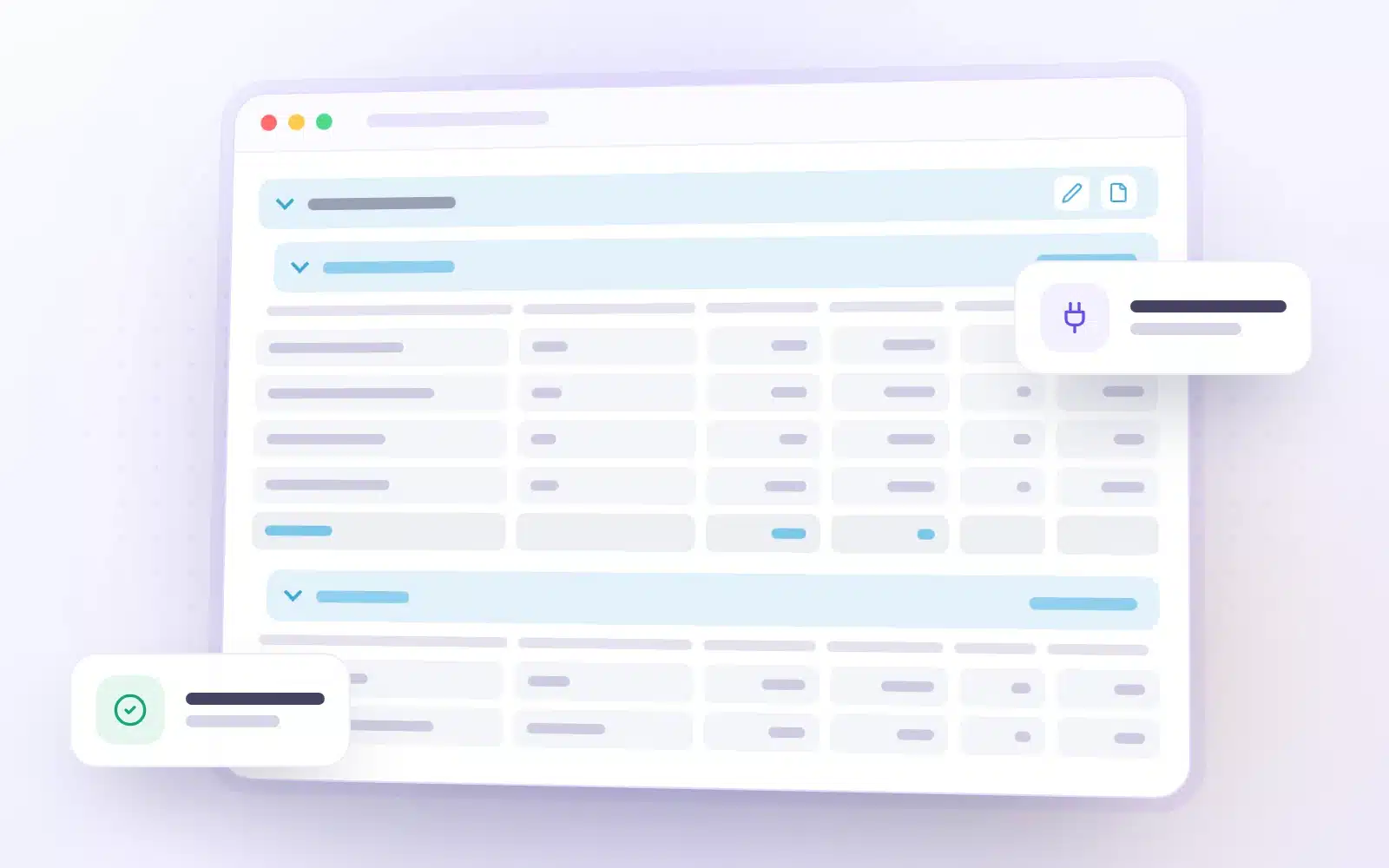
That is why Carform integrates with estimating tools: the estimate is imported into the file, with its labour and items, without being re-entered. It then follows the file through to the signed repair order, workshop scheduling and invoicing. It is the principle of connected body shop software.
FAQ: body shop estimating
What workshops ask about estimating