How to choose body shop software in 2026
Spreadsheets, paper, a standalone estimating tool or a complete solution: there is no shortage of options, and they are not all equal. Here are the criteria that really make a difference when you choose body shop software, including in France’s e-invoicing reform, which reaches SMEs in 2027.
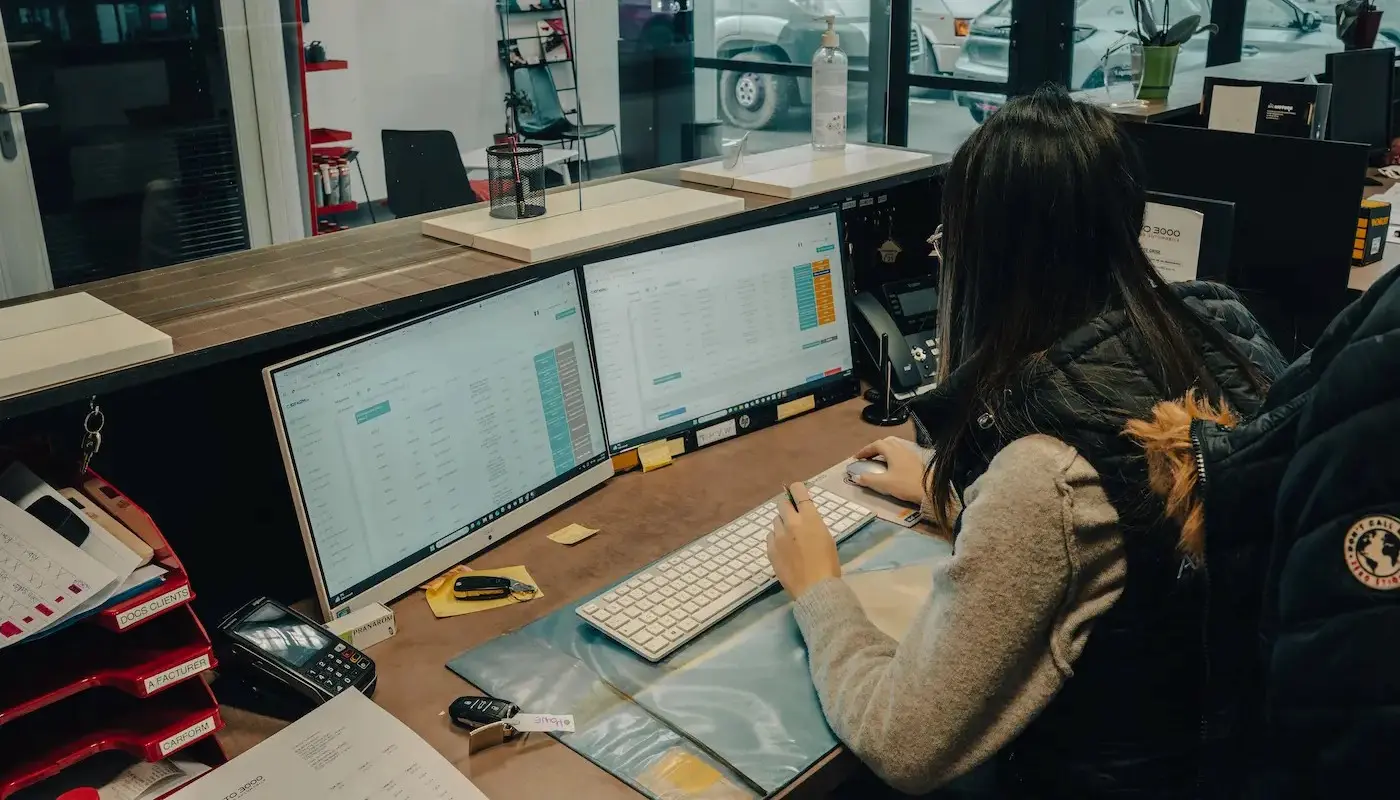

The management software built for automotive aftersales.
Why software changes everything in a body shop
A spreadsheet or paper forms can be enough while a workshop handles a few files a week. As volume grows, this way of working shows its limits: nobody always knows where a vehicle stands, information gets lost between panel beater, reception and workshop manager, and every customer call turns into a search for the file.
In France, the e-invoicing reform also changes the picture. Since 1 September 2026, every workshop must be able to receive electronic invoices, and SMEs will have to issue them by 1 September 2027 at the latest, in a structured format, through an approved platform. Software that can produce this data cleanly is becoming hard to avoid.
Tracking quotes, invoicing and lead times
Preparing a bodywork quote means combining several pieces of data: parts, labour, paint and sometimes an insurance assessment. Good software centralises this information and generates the quote in minutes, with automatic reminders and conversion into an invoice without re-entry.
It is also what lets you follow the real progress of each file: being estimated, waiting for parts, in repair, ready for handover. Without that visibility, delays build up silently and nobody sees them coming until a customer gets impatient.
Communication with customers and insurers
This is often what weighs most day to day: a customer calling to ask where their car is ties up reception, interrupts the workshop manager and slows everyone down. Software that centralises file status and keeps the customer informed automatically genuinely changes the team’s workload.
“With Carform, we get far fewer phone calls, 20 to 30% fewer.”
Integration with your existing business tools
Few workshops start from scratch: most already use an estimating tool, paint software or a DMS for parts. The criterion to check before switching is the new tool’s ability to connect to them rather than asking for everything again through double entry.
Carform integrates with solutions such as Audatex, GT Motive and Qapter for estimating, DARVA for insurance, and Axalta for paint, so data flows without re-entry between the tools already in the workshop.
Easy adoption by the whole team
Software that is powerful on paper but too complex to pick up stays underused. In a workshop, the tool has to work for the receptionist as well as the panel beater on the floor, often without time for long training.
Test this before signing: asking for a demo with the people who will use the tool every day, not just management, gives a far better idea of what will actually be adopted once the software is in place.
FAQ: body shop software
Questions we hear before workshops switch tools