Remote repair tracking: what work providers and fleet managers expect from their repairers
Insurers, leasing companies and fleet managers no longer ask only for a good repair. They want to track their vehicles remotely, get reliable completion dates and receive clear reporting. For a workshop, meeting those expectations has become the best way to keep its approved repairer agreements, and to win new ones.

The management software built for automotive after-sales.
What do work providers expect from a repairer in 2026?
Visibility, first and foremost: knowing where each vehicle stands, when it will be available, and having reliable data to plan ahead. Price and repair quality remain the baseline, but the ability to keep them informed is what sets a repairer apart.
A work provider does not run a workshop: they run a fleet, often spread across several repairers. Every day of downtime costs them directly (replacement vehicle, missed jobs, a driver without a car), and uncertainty about completion dates hurts them most.
So the relationship comes down to one simple thing: keeping them informed continuously, without them having to pick up the phone.
Three levers for effective remote repair tracking
Real-time visibility
Giving access to each repair’s progress, stage by stage, removes the need for chasers and reassures the work provider. They check the job status when they need it, instead of calling the workshop to ask.
Reliable completion dates
A date announced and met is worth more than an optimistic date missed. To make completion dates reliable, a workshop can rely on its history of similar repairs and its actual workload, rather than a rough guess.
Clear reporting
A few simple indicators, shared regularly, are enough: average downtime, on-time completion rate and comeback rate. These are exactly the KPIs fleet managers track on their side to compare their repairers.
How to become a work provider’s trusted repairer
Three habits make the difference over time:
- Agree commitments from day one: turnaround times, quality standards, frequency and content of reporting.
- Document your actual results: work providers favour partners who can prove their consistency with numbers.
- Centralise communication: information entered once should be visible to everyone involved, without forwarding emails.
How can you track fleet repairs remotely?
With a platform shared between the workshop and the work provider that updates vehicle status continuously. Where phone calls and spreadsheets create blind spots, a shared platform gives everyone the same information at the same time.
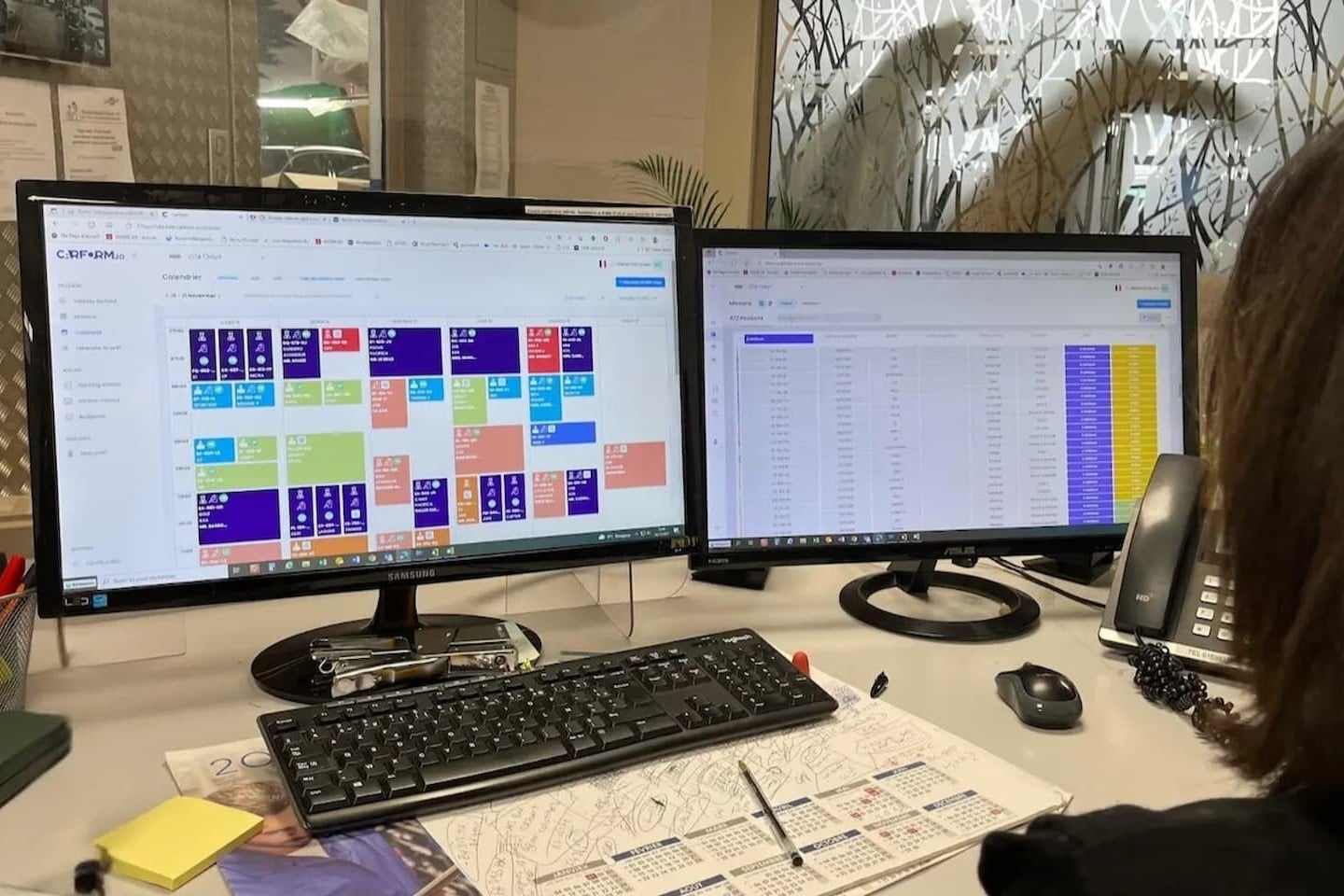
That is Carform’s approach: the workshop moves the job forward in its own tool, and the work provider follows progress, expected return dates and downtime in real time, repairer by repairer. On the workshop side, the AI agent wiZard helps estimate realistic completion dates.
From subcontractor to partner: what remote tracking changes
A workshop that shares its progress in real time is no longer selling only repair hours: it is selling predictability. That is what turns a subcontracting relationship, renegotiated at every tender, into a lasting partnership.
Give your work providers real-time repair tracking, without one more phone call
Book a demoFAQ – Remote repair tracking
What workshops and fleet managers ask most