Cutting data re-entry between insurers and body shops: a practical guide
Picking up a job, copying an assessor’s report, cross-checking an invoice against the insurer’s platform: in a body shop, the same information is often typed three or four times on a single claim file. Here is where insurer data re-entry hides, what it really costs and how to make it disappear.
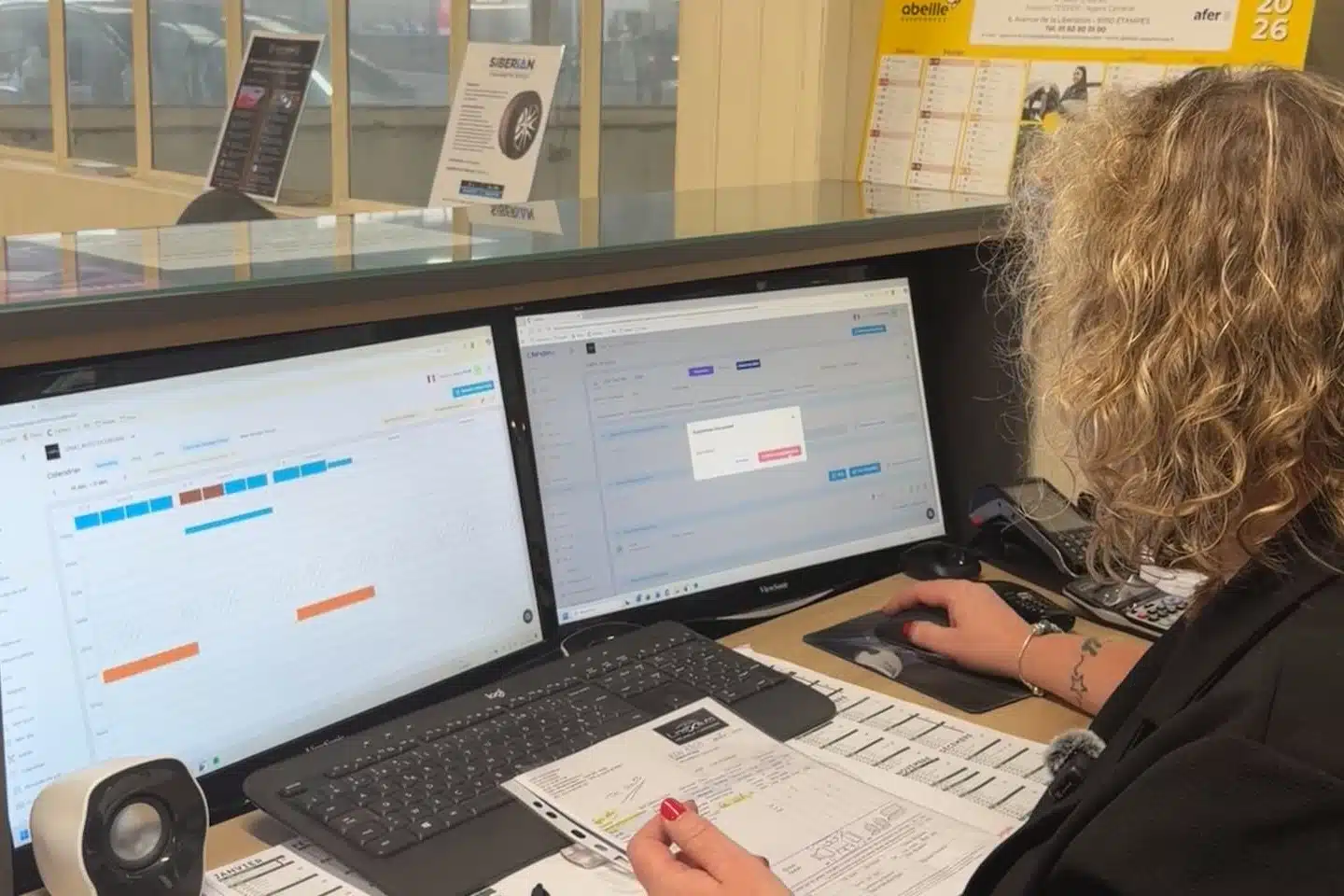

The management software built for automotive aftersales.
Why does insurer data re-entry cost body shops so much?
Because a claim file passes through several tools that do not talk to each other: the insurer’s platform, the estimating tool, the workshop software, then invoicing. At each step, someone in the office copies the same data: registration number, claim number, amounts. Multiplied by dozens of claims a month, this work eats into margins without ever showing up in the dashboards.
Lost time is only half the problem. One reference copied wrongly, or an amount that differs from one platform to another, is enough to block a file, and every block triggers reminders, late payments and sometimes disputes with the insurer.
The three points where information gets re-entered
When the job arrives. The claim comes in through an insurance platform (in France, DARVA, Assercar or Capsauto), then has to be recreated by hand in the workshop tool.
After the assessor’s report. The items approved by the assessor are reused to build the estimate and the repair order. A copying error at this stage ends up on the invoice.
At invoicing. The invoice sent to the insurer must match the approved estimate exactly, which means cross-checking information across several platforms. This is where most of the discrepancies that delay payment begin.
Three habits to reduce re-entry this week
Even before changing tools, three habits limit the damage:
- Centralise: one place where the job, estimate, repair order and invoice live, instead of a file scattered across emails, paper and platforms.
- Standardise file intake: a single checklist (claim number, insurer, assessor, excess, courtesy car) completed once and for all on arrival.
- Enter data at the source: whoever receives the information enters it, instead of noting it down for a colleague to type up later.
These habits reduce errors, but they do not remove re-entry itself. For that, your tools need to talk to each other.
What changes with software connected to insurance platforms
When body shop management software is connected to the platforms, data is entered once and flows through the rest of the file. Carform integrates with DARVA, the French insurance data exchange platform, to automate claim intake: the job arrives in the software without being copied, and a text message goes to the customer so they can pick their own appointment slot.
For estimating, Carform integrates with market tools such as Audatex, Qapter, DAT and GT Motive. And with the wiZard module, Carform’s AI agent, jobs and assessor reports are automatically retrieved and filed in the right claim.
Insurer data re-entry in body shops
What body shops ask about exchanges with insurers