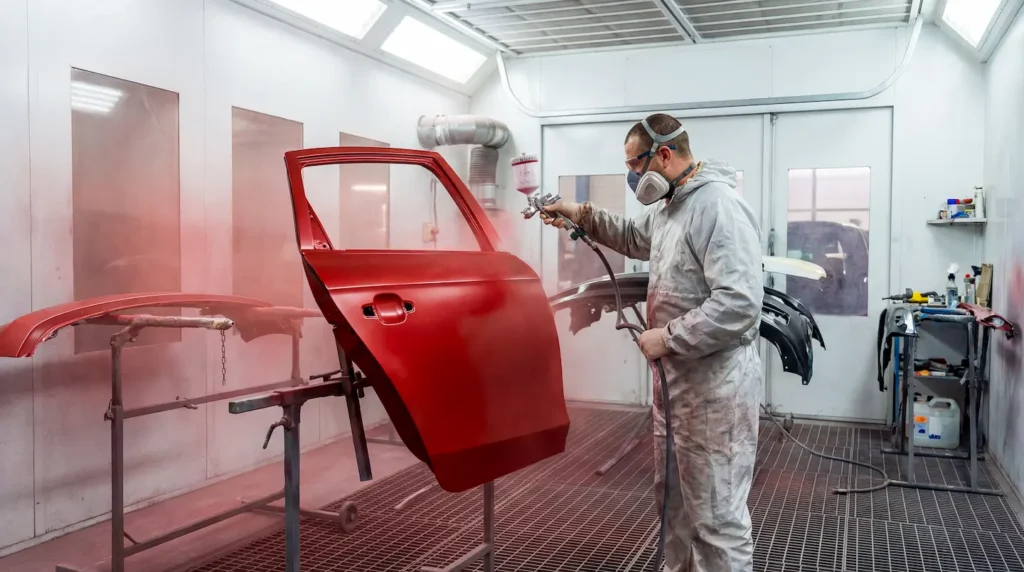
Body shop scheduling: 4 challenges to overcome for a more productive workshop
Body shop scheduling is a constant balancing act. Between unplanned jobs, late parts and customers in a hurry, workshop organisation can quickly turn into a source of stress rather than performance. These problems are well known, and they can be solved with method and the right tools. Here are the 4 main body shop scheduling challenges, and the practical habits that put you back in control.

The management software built for automotive aftersales.
1. A workload that is hard to anticipate
In a body shop, no two jobs are alike: one hour for a small repair, several days for a complex insurance claim. Spreading the workload fairly, anticipating incoming vehicles and absorbing peaks is often a daily headache for a workshop manager.
Three situations keep coming back: repair times that cannot really be estimated in advance, sudden peaks after bad weather or before the holidays, and a lack of visibility on the slots that are genuinely free in the weeks ahead. To regain control:
- Group jobs by average duration to estimate more accurately.
- Keep buffer slots that absorb the unexpected without pushing everything back.
- Use a shared digital schedule that the whole team can see.
All of this is built into Carform’s body shop management software, from booking to invoicing.
2. Unpredictable parts deliveries
Even a perfectly built schedule can fall apart because of one late part. And the problem rarely stays isolated: one delayed job pushes back another, a vehicle stays off the road longer than planned, and some bays sit idle because work cannot move forward.
The fix comes down to three habits: check that the part is available before confirming the appointment, set alerts on critical orders (Carform does this automatically), and identify the most reliable supplier for each type of part in advance.
3. Internal coordination that breaks too easily
A body shop is a team ecosystem: reception, panel beaters, painters, technicians. If just one person is poorly informed, the whole organisation seizes up. Friction almost always comes from the same places: no schedule shared between workstations, delays that are not reported in real time, and jobs badly handed over from one stage to the next.
Three practices are enough to smooth things out:
- A 10-minute briefing at the start of each day to align the team.
- A shared schedule that is clear and updated in real time.
- A scheduling lead who makes the calls and adjusts throughout the day.
4. Pressure from customers and deadlines
Customers expect one thing above all: that the promised date is met. A car that is not ready when announced, or unclear communication, guarantees frustration, with disputes and a reputation that suffers. Customer communication is an integral part of workshop productivity.
The pitfalls are always the same: overly optimistic promises at booking, information passed on too late, a vehicle that is not ready at the agreed time. You avoid them by being clear about realistic lead times from the start, anticipating delays with internal alerts, and contacting the customer before they have to pick up the phone.
Taking back control of your body shop schedule
These four challenges tell the same story: an effective body shop schedule relies on anticipation and the flow of information, not improvisation. Buffer slots, secure parts supply, smooth coordination and proactive communication: none of these pillars is out of reach. What matters is putting in place the organisation and tools that make them second nature.
That is exactly what our body shop software does: it centralises the schedule, assigns tasks and shows workshop workload in real time, turning your schedule from a source of stress into a real performance lever.
A shared body shop schedule, visible to the whole team in real time
Request a demoBody shop scheduling
Questions workshop managers ask about organising their schedule